
Washington Slagbaai National Park: A Guide to Bonaire's Wild North
·
Quick answer
Washington Slagbaai National Park covers almost a fifth of Bonaire's north end. Visitors explore it on two self-drive loop routes past cactus desert, volcanic hills, salt lakes with flamingos, and remote snorkeling beaches. The park opens daily around 8:00, with last entry in the early afternoon, and a high-clearance vehicle is recommended.
Key takeaways
- The park protects nearly 20 percent of Bonaire, in the wild north of the island.
- You drive one of two marked loops; roads are rough, so a high-clearance vehicle helps.
- Salt lakes such as Gotomeer and Salina Slagbaai are reliable flamingo spots.
- Wayaka and Boka Slagbaai are excellent, uncrowded snorkeling stops.
- Open daily from about 8:00, with last admission in the early afternoon; a nature fee applies.
Most of Bonaire’s coast is gentle and developed, but the north of the island is something else entirely: a rugged, near-empty wilderness of cactus, volcanic rock, and hidden bays. Almost all of it is protected as Washington Slagbaai National Park, the oldest nature sanctuary in the Dutch Caribbean and the best place on the island to see Bonaire as it was before tourism.
What is Washington Slagbaai National Park?
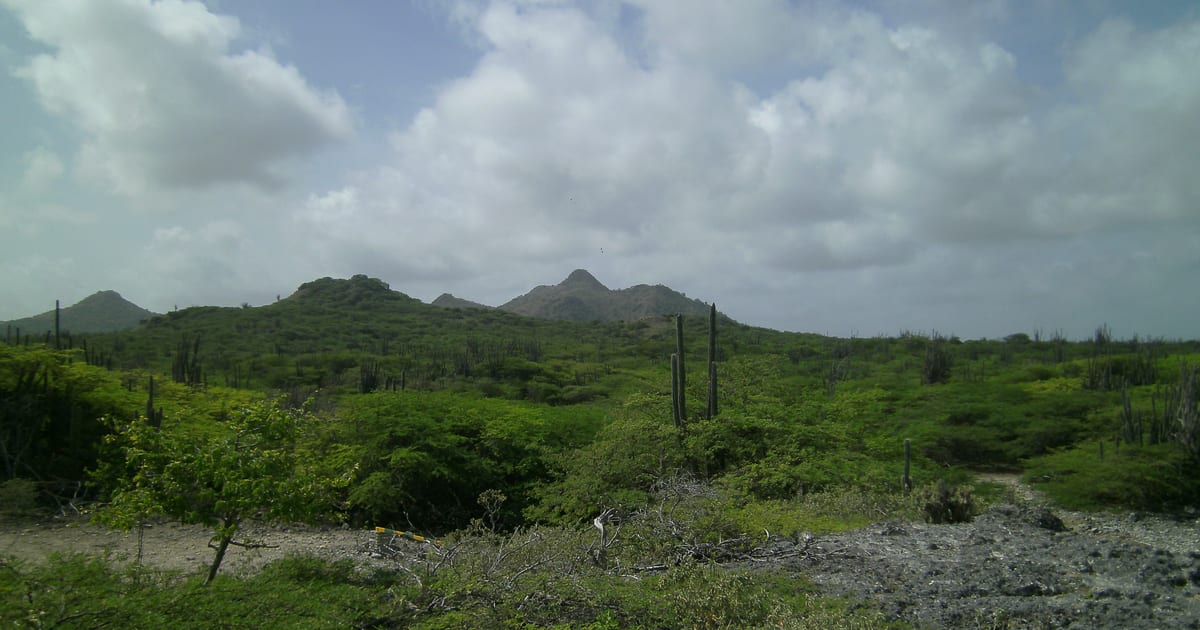
The park covers close to 20 percent of Bonaire, spreading across the whole northern tip. It was created from two former plantations, Washington and Slagbaai, whose land once produced salt, charcoal, aloe, and goats. Today it is managed by the nature foundation STINAPA and preserves a landscape that looks more like Arizona than a typical Caribbean island, with giant cacti, arid hills, salt lakes, and a coastline of cliffs and quiet coves. Around 210 bird species have been recorded here, including flamingos and the bright green Lora, Bonaire’s endemic parrot.
How do you visit the park?
You explore Washington Slagbaai by car on one of two marked self-drive loops that start at the visitor center near the entrance. The shorter green route, roughly 24 kilometers, focuses on the Slagbaai side and its salt lakes. The longer yellow route, around 34 kilometers, adds the wilder Washington side, the Malmok lighthouse, and Bonaire’s highest point, Brandaris hill. The roads are one-way in the direction of travel, so you follow the loop the whole way around. Give yourself a half day at least, and longer if you plan to snorkel or hike.
What vehicle do you need?
This is the single most important piece of planning. The park roads are unpaved, rocky, and rough, and the longer yellow route in particular can be tough on a low car. A pickup truck, SUV, or other high-clearance vehicle is strongly recommended, and many visitors on the island already rent a pickup for diving. Check your rental agreement too, because some companies exclude the park or charge extra. Carry a spare tire and know how to change it.
When can you go, and what does it cost?
The park is generally open daily from about 8:00 to 17:00, but crucially the last entry is in the early afternoon, usually around 14:30 to 15:00, so that everyone can complete the loop before closing. That makes a morning start the safe choice. Entry requires the STINAPA nature fee. If you already hold a valid Marine Park dive tag for the year it may cover park entry, but confirm the current arrangement and price at the gate or on the STINAPA website.
What wildlife will you see?
Flamingos are the headline act. The salt lakes in and around the park, including Gotomeer just outside the boundary and Salina Slagbaai within it, hold flamingos for much of the year. You may also see iguanas basking on the rocks, wild goats and donkeys, ospreys, parakeets, and if you are lucky the endemic Lora parrot. Keep your distance from the flamingos, as they spook easily and flush at the first sign of disturbance.
Can you swim and snorkel there?
Yes, and it is a highlight. Wayaka 2 is a small, clear cove that is one of the finest snorkeling and shore-diving stops on the island, and Boka Slagbaai, the old plantation harbor, has calm water beside historic buildings. Playa Chikitu and Boka Kokolishi are dramatic to look at but have rough surf and are not for swimming. Bring everything you need, because there are no shops, restaurants, or reliable phone signal inside the park.
Practical tips
Fill your fuel tank, pack plenty of water, sunscreen, and food, and start early. There are no facilities beyond the visitor center, so treat a visit as a self-sufficient day out. A good base for reaching the north is anywhere around Kralendijk or the west coast; browse vacation rentals on Bonaire to find one.
Frequently asked questions
What are the opening hours of Washington Slagbaai National Park?
The park is generally open every day from about 8:00 to 17:00, with last entry in the early afternoon, usually around 14:30 to 15:00. Because you cannot enter late in the day, arrive in the morning to have time for the full loop.
Do you need a 4x4 for Washington Slagbaai?
A high-clearance vehicle is strongly recommended. The park roads are unpaved, rocky, and washboarded in places. The longer route in particular is hard on a standard rental car, and some rental agreements do not cover the park, so check first.
Can you see flamingos in the park?
Yes. The salt lakes inside and beside the park, including Gotomeer and Salina Slagbaai, are among the most reliable places on Bonaire to see wild Caribbean flamingos, often year-round.
Is there snorkeling in the park?
Yes. Beaches such as Wayaka 2 and Boka Slagbaai are quiet, scenic snorkeling and diving spots inside the park. Bring your own gear, water, and food, because there are no shops once you are inside.