
Bonaire's Salt Flats and Slave Huts: A Guide to the South
Quick answer
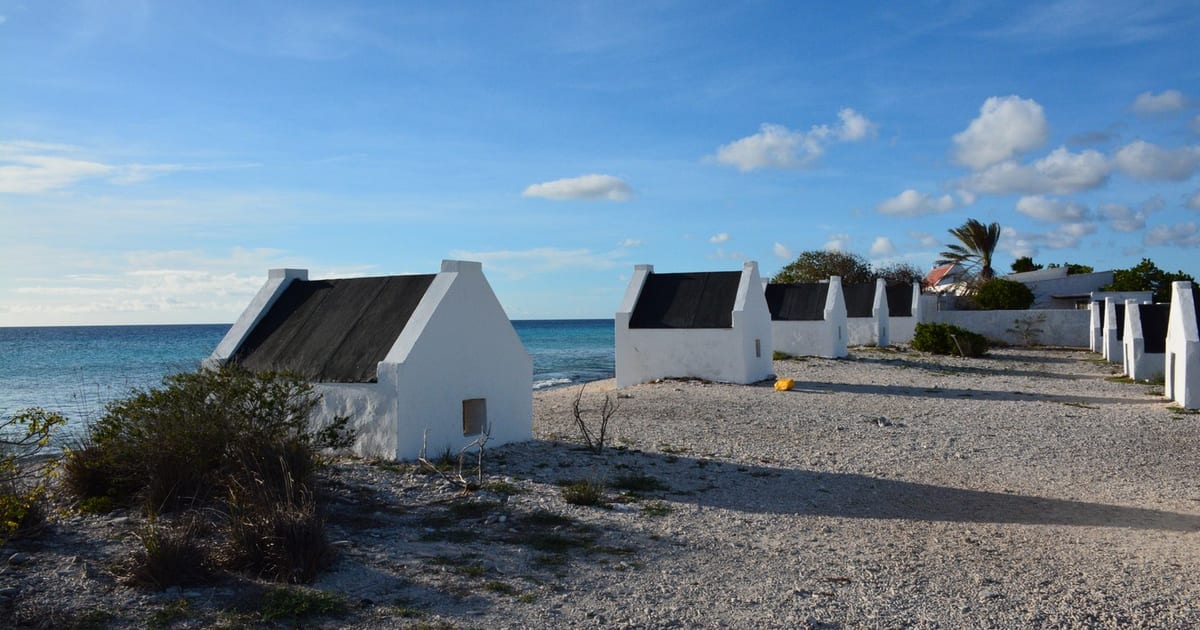
Southern Bonaire is dominated by vast pink salt flats, still worked today, alongside four colored obelisks and rows of tiny stone slave huts. The huts, built in 1850, are a sobering memorial to the enslaved people forced to harvest the salt. The whole area sits along the coastal road and is free to visit.
Key takeaways
- The salt pans have produced salt for centuries and still operate commercially today.
- Four obelisks, colored red, white, blue, and orange, guided salt ships from 1837.
- The stone slave huts, built in 1850, are a memorial to enslaved salt workers.
- The pans often look pink, from the same algae that feeds the flamingos.
- It is a roadside stop in the south, free to visit, next to the flamingo sanctuary.
Drive south from Kralendijk and the landscape changes quickly. The scrub gives way to enormous flat pans of shimmering water, blindingly white mountains of harvested salt, and a coastline of pale sand and turquoise sea. This is the industrial and historical heart of the island, and it holds both Bonaire’s economic story and its darkest chapter, side by side along a single quiet road.
Why is there salt here?
Salt has shaped Bonaire for centuries. The hot sun, steady wind, and shallow coastal lagoons are ideal for evaporating seawater and leaving salt behind, and people have harvested it here since colonial times. The salt was valuable, used to preserve food long before refrigeration, and its production was controlled by Dutch and briefly British authorities over the centuries. Salt is still big business today: a modern operation continues to harvest hundreds of thousands of tons a year from these same pans, which is why you will see white salt mountains and working machinery as you drive past.
Why are the pans pink?
The salt ponds often glow a soft pink. The color comes from microscopic life, algae and brine shrimp that thrive in extremely salty water, the very same organisms that give the island’s flamingos their color. Depending on the pond, the season, and the light, the water can range from pale rose to a vivid magenta, and it is at its most photogenic in the low, warm light of early morning or late afternoon.
What are the obelisks?
Along the coast you will pass tall, pointed stone obelisks painted in strong colors. Four were built by the Dutch in 1837, colored red, white, blue, and orange, echoing the Dutch flag and the royal house of Orange. In the days before modern navigation, each colored obelisk marked a different salt loading point, so an approaching ship’s captain knew exactly which pan to sail toward to collect a particular batch of salt. They are still standing, and they make striking landmarks against the white salt and blue sea.
The slave huts
Beside two of the loading points stand rows of tiny stone huts, and they tell a much harder story. These are the slave huts, built in 1850. The salt was harvested by enslaved people, many of them from West Africa, who cut and carried it by hand under the fierce sun. During the working week they were forced to sleep in these huts, each one barely large enough for a few people to lie down in, with no room to stand comfortably. At the weekend they walked many hours back to their families in the village of Rincon in the north, then returned. Slavery was not abolished here until 1863, only 13 years after the huts were built.
Today the huts are preserved as a memorial. They are small, silent, and deeply affecting, and standing in front of them brings the human cost of the salt trade into sharp focus. Visit them with the respect that history deserves. Look, reflect, and photograph if you wish, but do not treat them as a playground.
How to visit
The salt flats, obelisks, and slave huts all line the coastal road in the south of the island, an easy drive from Kralendijk. It is free to see them, and you simply pull over at the marked points. The salt works itself is a working industrial site and is fenced off, but everything of interest to a visitor is visible from the road. The same drive takes you past Pink Beach and the Pekelmeer flamingo sanctuary, so it is natural to combine the history, the beach, and the flamingos into one slow afternoon loop.
To explore the south at your own pace, a base near Kralendijk keeps the drive short. Browse vacation rentals on Bonaire, and pair this route with our guide to seeing flamingos.
Frequently asked questions
What are the slave huts in Bonaire?
They are rows of very small stone huts in the south of the island, built in 1850, where enslaved people who harvested salt were forced to sleep during the working week. Each hut is barely large enough for a few people to lie down. They stand today as a memorial to that history and can be viewed from the roadside.
Why are the salt flats in Bonaire pink?
The salt ponds take on a pink hue from microorganisms and algae in the highly salty water, the same brine shrimp and algae that turn the island's flamingos pink. The color is strongest in certain ponds and light conditions.
What are the colored obelisks for?
The Dutch erected four obelisks, colored red, white, blue, and orange, in 1837. Before modern navigation, they marked the different loading points so ships knew which pan to approach for their salt. The colors echoed the Dutch flag and royal house.
Can you visit the salt flats and slave huts?
Yes. They line the coastal road in the south of the island and are free to visit and view from the roadside. The salt works itself is a working industrial site and is not open, but the huts, obelisks, and pans are all visible from the road. Please treat the huts as the memorial they are.