
Mangrove Kayaking in Bonaire: Paddling the Lac Bay Reserve
Quick answer
Bonaire's mangrove forest lines Lac Bay on the east coast, a protected wetland that acts as a nursery for the island's reef fish. Visitors explore it on guided kayak and snorkel tours, gliding through narrow channels between the roots and snorkeling among juvenile fish, upside-down jellyfish, and wading birds.
Key takeaways
- The mangroves fringe Lac Bay, a protected wetland on the east coast.
- Mangroves are a nursery: young reef fish grow up sheltered among the roots.
- Guided kayak and snorkel tours are the best and most responsible way in.
- Expect juvenile fish, upside-down jellyfish, herons, and sometimes flamingos.
- The water is calm and shallow, so it suits families and first-time paddlers.
Most visitors know Lac Bay for its wind and its windsurfers, but the calm inner shore of the bay hides something completely different. A dense green mangrove forest grows where the land meets the water, threaded with narrow channels you can only explore by kayak. Paddling quietly through it is one of the most peaceful things you can do on Bonaire, and one of the most rewarding for anyone curious about how the reef actually works.
What is the mangrove forest?
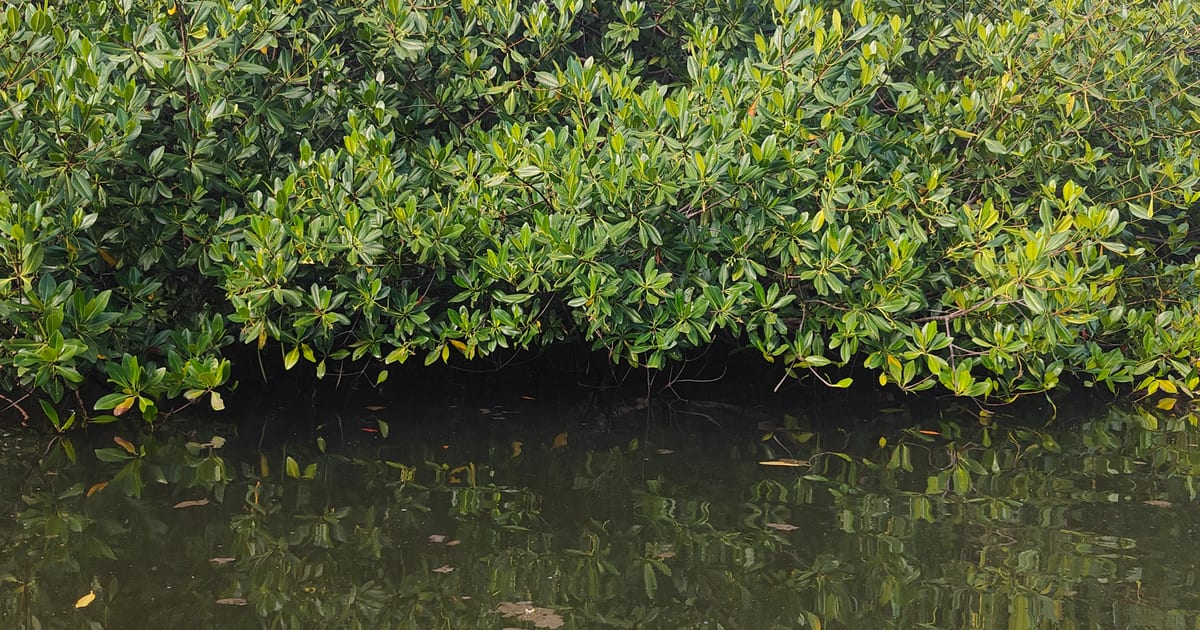
The mangroves of Lac Bay form a protected wetland on the east coast of the island. Mangroves are salt-tolerant trees that grow in shallow coastal water, sending down tangled roots that trap sediment and create sheltered, brackish pools. On Bonaire this forest is more than scenery. It is a nursery for the sea. Countless young fish, including many species that later move out to the coral reef, spend their early lives hidden among the roots where larger predators cannot easily reach them. Protecting the mangroves protects the reef that made the island famous.
Why kayak instead of walk?
You cannot really walk into a mangrove forest. The way through is by water, along channels that wind between the trees, and a kayak is the perfect craft for it. It sits low and quiet, slips into narrow gaps, and lets you drift close to the roots without disturbing the wildlife. The water inside the bay is shallow, calm, and free of waves, so paddling is easy and there is no open-sea swell to deal with. That combination makes it a gentle outing that suits families and complete beginners as much as experienced paddlers.
Should you take a guided tour?
For the mangroves, a guided tour is the right choice, and it is how nearly everyone visits. The channels branch and rejoin into a confusing maze, it is easy to get lost or run aground, and the ecosystem is fragile enough that wandering off on your own can damage it. Local operators, including the Mangrove Info Center at Lac Bay, run kayak tours led by guides who know the routes, explain the ecology as you go, and take you to the best spots. Many tours combine paddling with a snorkel stop, where you slip into the water among the roots to see the nursery up close.
What will you see?
The mangroves are alive with detail. Look down and you will see clouds of tiny silver fish sheltering under the roots, the reef’s next generation growing up in safety. Resting on the sandy bottom you may spot upside-down jellyfish, a harmless species that lies bell-down to catch the sun. Overhead and along the shore, herons, egrets, and other wading birds hunt in the shallows, and flamingos sometimes feed in the salt pools nearby. Snorkeling the channels reveals sponges and small marine life clinging to the submerged roots.
What should you bring?
Wear a hat, apply reef-safe sunscreen before you go, and bring water, because the sun over open water is strong even on a calm day. A rash guard protects your shoulders while paddling. If your tour includes snorkeling, bring or rent a mask and snorkel, and consider a dry bag for anything you do not want to get wet. Most operators provide the kayak, paddle, and buoyancy aid.
Why it is worth doing
Mangrove kayaking is the quiet counterpoint to Bonaire’s busier water sports. It is calm, educational, and genuinely beautiful, and it gives you a new appreciation for why the island’s reefs are so healthy. It also pairs naturally with a day at Lac Bay: a windsurf lesson or a swim at Sorobon in the morning, the mangroves in the gentler afternoon.
To be near the east coast and Lac Bay, look at vacation rentals on Bonaire toward that side of the island, and see our windsurfing guide for more on the bay.
Frequently asked questions
Where are the mangroves in Bonaire?
They line Lac Bay on the east coast, the same large, reef-sheltered bay used for windsurfing. The mangrove forest sits along the calm inner shore and is part of a protected wetland reserve.
Do you need a guide to kayak the mangroves?
A guided tour is strongly recommended and is how most people visit. The channels form a maze, the ecosystem is fragile, and a guide shows you where to go, explains what you are seeing, and leads the snorkel stops. Local operators such as the Mangrove Info Center run kayak and snorkel tours.
What will you see kayaking the mangroves?
Narrow water channels between mangrove roots, schools of young fish using the roots as shelter, harmless upside-down jellyfish resting on the bottom, and birds such as herons and egrets. Flamingos sometimes feed in the shallows nearby.
Is mangrove kayaking suitable for beginners and families?
Yes. The water inside the bay is calm, shallow, and protected from waves, so it is gentle for first-time paddlers and children. Tours are usually relaxed and move at an easy pace.