
Where to See Flamingos on Bonaire
·
Quick answer
Bonaire is one of only a handful of Caribbean flamingo breeding sites, home to thousands of the birds. The most reliable places to see them are the Pekelmeer Flamingo Sanctuary in the south, the salt lake Gotomeer in the north, and Washington Slagbaai National Park. Watch from a distance, because flamingos flush easily.
Key takeaways
- Bonaire hosts one of the few flamingo breeding colonies in the world.
- Pekelmeer in the south is the protected breeding ground and cannot be entered.
- Gotomeer and the salt lakes in Washington Slagbaai are the best viewing spots.
- Breeding season runs roughly from January to July, but flamingos are seen year-round.
- Keep your distance and stay quiet; disturbance can drive the birds off their nests.
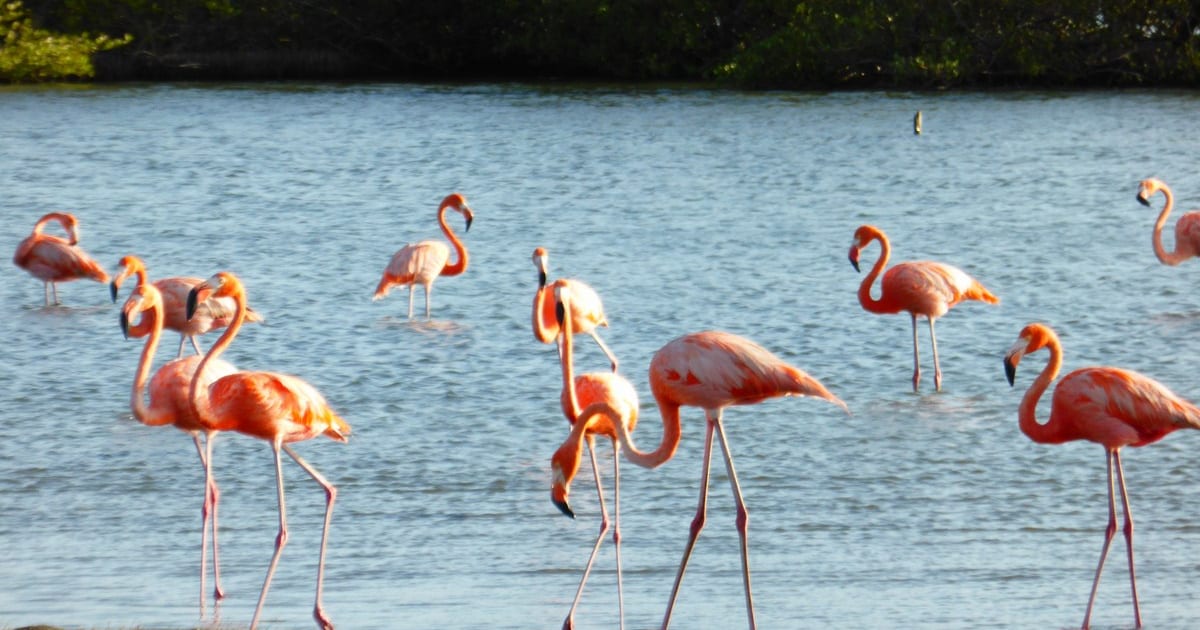
Few sights say Bonaire quite like a line of flamingos wading through a mirror-flat salt lake at sunset. The island is not just a place where flamingos happen to live, it is one of the very few places on the planet where they breed in large numbers. That makes a flamingo sighting almost guaranteed, as long as you know where to look and how to behave.
Why does Bonaire have so many flamingos?
Bonaire’s flat, salty lagoons are ideal flamingo habitat. The birds feed on tiny brine shrimp and algae that thrive in salt water, and the island’s large salt pans in the south provide exactly that food in abundance. Bonaire is one of only a small number of Caribbean flamingo breeding grounds, and thousands of Caribbean flamingos, the largest and pinkest of the flamingo species, gather here. Many commute daily between Bonaire and the coast of nearby Venezuela to feed.
Where can you see them?
There are three reliable areas. In the south, the Pekelmeer Flamingo Sanctuary sits among the salt works and is the protected breeding colony. You can view it from the main road, but the sanctuary itself is strictly off limits so the birds can nest undisturbed. In the north, Gotomeer is a scenic salt lake beside the road where flamingos gather in good numbers, often with an easy view from your car. Inside Washington Slagbaai National Park, the salinas such as Salina Slagbaai add more chances, along with a wild backdrop. Around Lac Bay on the east coast you can sometimes see flamingos feeding among the mangroves.
When is the best time to go?
You can see flamingos on Bonaire in any month, because a resident population stays all year. Numbers are highest during the breeding season, which runs roughly from January to July, when the colony at Pekelmeer is most active. For the best experience at any time of year, go early in the morning or in the late afternoon. The light is softer for photos, the heat is gentler, and the birds are often more active and closer to the shallows.
Why are they so pink?
Flamingos are not born pink. Chicks hatch grey and slowly take on color as they grow. The pink comes entirely from their food. The brine shrimp and algae they eat are rich in natural pigments called carotenoids, the same family of pigments that makes carrots orange, and as the flamingos digest them the color settles into their feathers. A well-fed Caribbean flamingo can be a deep coral pink, which is why the salt lakes of Bonaire produce such vivid birds.
How do you watch flamingos responsibly?
Flamingos are nervous birds. They will take flight at the first sign of a person approaching, and during breeding a single disturbance can cause adults to abandon nests, which kills eggs and chicks. So the rules are simple. Stay in or beside your vehicle where you can, keep noise down, never walk toward the birds, and never, under any circumstances, enter the Pekelmeer sanctuary. A camera with a zoom lens or a pair of binoculars will get you far closer than your feet ever should. Drones are also restricted near the colonies.
Combine it with the rest of your day
Flamingo watching pairs naturally with other stops. The southern salt flats and the historic slave huts are right beside Pekelmeer, and the northern lakes sit on the way to or inside Washington Slagbaai National Park. To be out at the lakes for the best early light, it helps to stay nearby; browse vacation rentals on Bonaire to find a base.
Frequently asked questions
Where is the best place to see flamingos in Bonaire?
For easy roadside viewing, Gotomeer in the north and the salt lakes inside Washington Slagbaai National Park are excellent. The main breeding colony is at Pekelmeer in the south, which you can see from the road but not enter, as it is a strictly protected sanctuary.
What time of year can you see flamingos in Bonaire?
Flamingos live on Bonaire year-round, so you have a good chance in any month. The breeding season, when numbers at Pekelmeer peak, runs from roughly January to July.
Why are Bonaire's flamingos pink?
Their pink color comes from their diet. Flamingos feed on brine shrimp and algae in the salt lakes that are rich in natural pigments called carotenoids, and those pigments turn their feathers shades of pink and orange.
Can you get close to the flamingos?
No, and you should not try. Flamingos are shy and take flight at the first sign of disturbance, which is especially harmful during breeding. Watch and photograph from the road or a distance with a zoom lens, and never enter the Pekelmeer sanctuary.